Designing and manufacturing with cold forming: technical FAQs (Part 2)

September 2026

In this second article, we complete the FAQs on cold forming by answering the last five most frequently asked questions, based on the experience gained by GIDI Meccanica.

  1. What are the limits of cold forming?
    Cold forming is an extremely precise process in terms of diameter, but it has some intrinsic limitations related to very tight customer specifications regarding lengths, complex geometries and/or undercuts.
    For this reason, GIDI Meccanica combines its core cold forming business with secondary finishing operations performed through turning. Together, these processes constitute our business model.
  2. Is it possible to produce asymmetrical parts?
    Traditional cold forming favors axial symmetry; however, thanks to our know-how, we are able to design special tooling that allows us to produce not only symmetrical components, but also parts with square or hexagonal sections, as well as complex geometries such as offset flanges and holes perpendicular to the component axis.
  3. Do you handle in-house tool design?
    Yes, and this is a cornerstone of our philosophy.
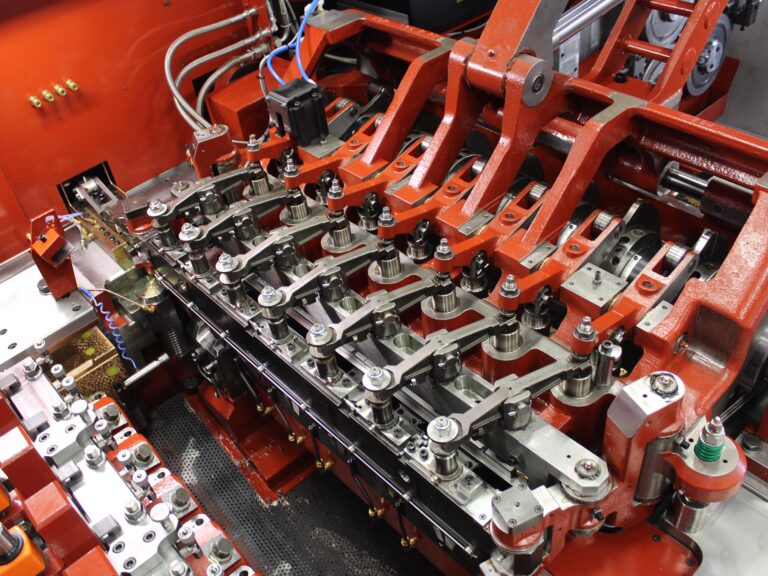
    Starting from the customer’s technical drawing, we develop our own design that meets the required specifications while being fully compatible with our production processes. We then design the forming sequence based on the principle of volume conservation, followed by the tooling required to manufacture the cold-formed part.
    Once the tooling is produced, we have an internal tooling department that supports us throughout sampling and production start-up phases, promptly intervening in case of any production issues and thus reducing machine downtime.
  4. What are the differences in initial investment between cold forming and turning?
    The cost of producing cold forming tooling is generally significantly higher than the cost of tools required for turning operations.
    For this reason, cold forming is typically used for batch sizes ranging from several tens of thousands of components up to millions of pieces per year.
    The initial investment is therefore amortized through the high productivity of the process, which enables reduced cycle times and improved cost competitiveness.
  5. In which industrial sectors is cold forming most advantageous?
    Wherever high volumes, cost competitiveness, and safety are required.
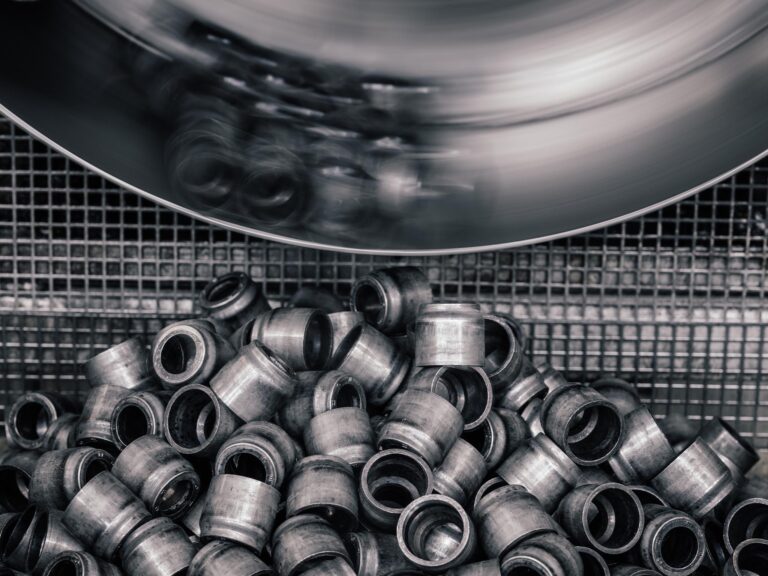
    Today we produce critical components for the automotive sector (e.g. parts for braking systems, suspensions, start & stop systems), the hydraulic industry (high-pressure fittings), and the sports sector (hooks and small metal components for ski boots).
    1.  

With these final FAQs, we conclude our in-depth look at cold forming, in which we have aimed to provide an overview of the key aspects to consider when evaluating this technology.